
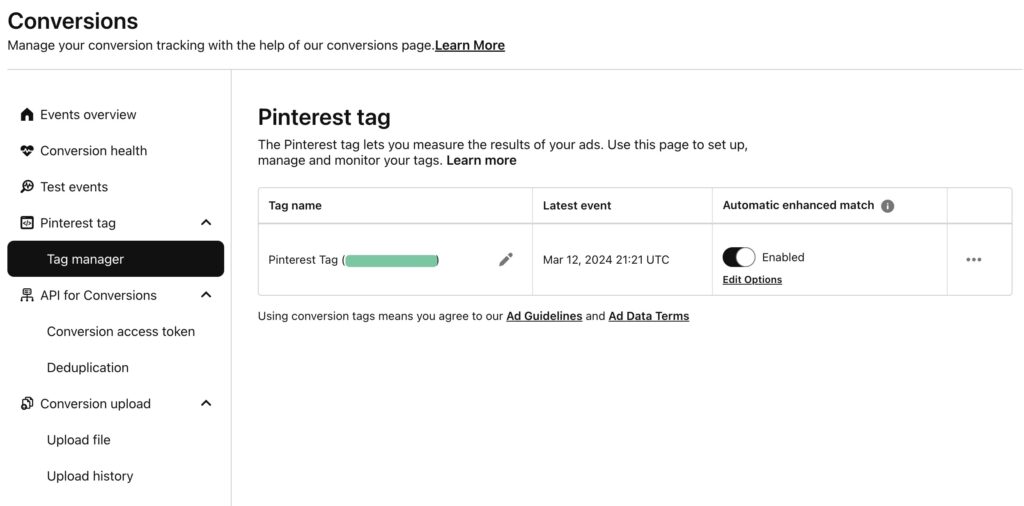
To track conversions in Pinterest, you need to get a Tag ID.
- Login to your Pinterest Ads account
- In the upper left corner, click on the menu icon and go to Business > Conversions
Create a new Tag if you do not yet have one.
If you have an existing Tag ID, copy it from highlighted spot in the screenshot below from the list and paste it into the Conversion Bridge settings.
What is Enhanced Match?
Enhanced Match lets you send more customer information to Pinterest so it can match more of your conversions to the right people, learn more here.
When Enhanced Match is enabled, Conversion Bridge sends the customer's email address with any event that has one — both logged-in customers and form submissions. For logged-in customers, it also sends a hashed customer ID so Pinterest can recognize returning visitors.
If you also set up the Conversions API, Conversion Bridge sends even more customer data server-side when it's available — name, phone number, and general location (city, state, postal code, and country) — for stronger matching.
Conversion Bridge never sends raw personal data. Every value is securely hashed with SHA-256 before it's sent.
Pinterest Conversions API
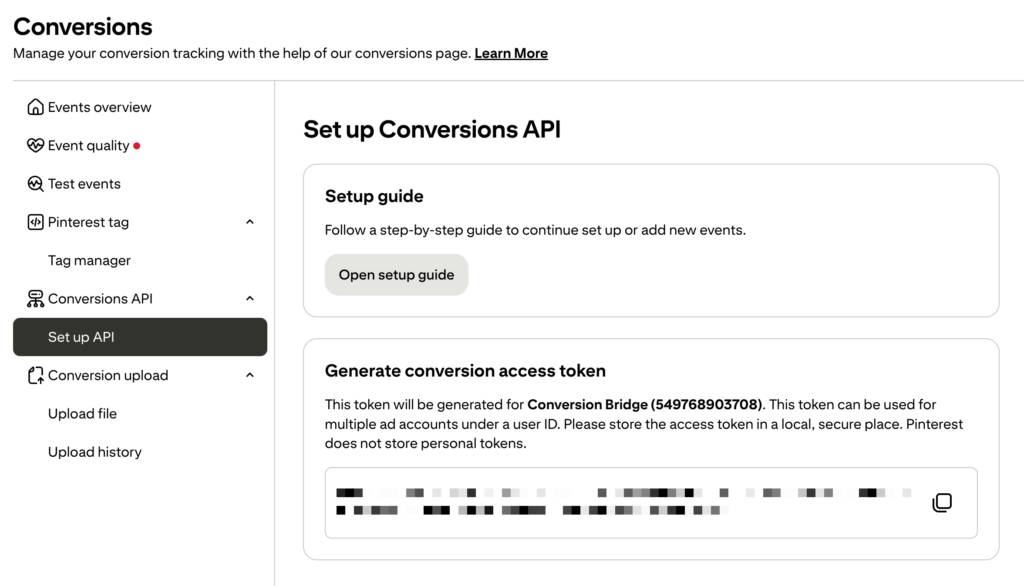
The Conversions API sends conversion events to Pinterest server-side, which improves tracking accuracy when browser-based tracking is blocked. To use it, add your Conversions API access token and Ad Account ID in the Conversion Bridge settings. You'll find the Ad Account ID in Pinterest Ads Manager, in the top-left account switcher or in the page URL. Generate the access token in Pinterest Ads Manager under Ads → Conversions, in the Conversions API → Set up API section. When both are set, browser and server events are automatically deduplicated so a conversion is never counted twice.
Conversion Bridge also captures the Pinterest click ID (from the _epik cookie set when someone clicks your Pinterest ad) and includes it with server-side events, so more conversions are attributed to the ad that drove them.
Test Mode
Test Mode lets you check that your Conversions API setup works without recording any events. When it's on, Conversion Bridge sends each server-side event with Pinterest's test flag. Pinterest validates the event and responds like normal, but nothing is added to your reporting.
Use it while you verify your access token and Ad Account ID are working, then turn it off. Events sent in Test Mode are not recorded, so leaving it on means no server-side conversions are counted.
Track Page Views
Pinterest recommends reporting a PageVisit only on the pages that matter, like a product or article page, not on every page of your site. Because of that, Conversion Bridge does not report a PageVisit on every page by default. If you want to track page views on specific pages, set up a custom event with the Page View type on those pages.
Some advertisers want every page view counted. A Pinterest representative has recommended this to customers, so the Track all Page Views option makes it possible.
When you enable it, Conversion Bridge fires a Pinterest PageVisit on every page. If you have also added your Conversions API token and Ad Account ID, the same page view is sent server-side too, and the two are deduplicated so a page view is never counted twice.
The browser side works with just your Tag ID. The server-side half needs the Conversions API token and Ad Account ID as well.
One thing to watch: don't enable this option and also run a separate custom Page View event, or your page views will be counted twice.